Comprehensive treatment for corneal diseases and refractive errors to improve vision and eye health.
DEPARTMENT OF
Cornea & Refractive Surgery
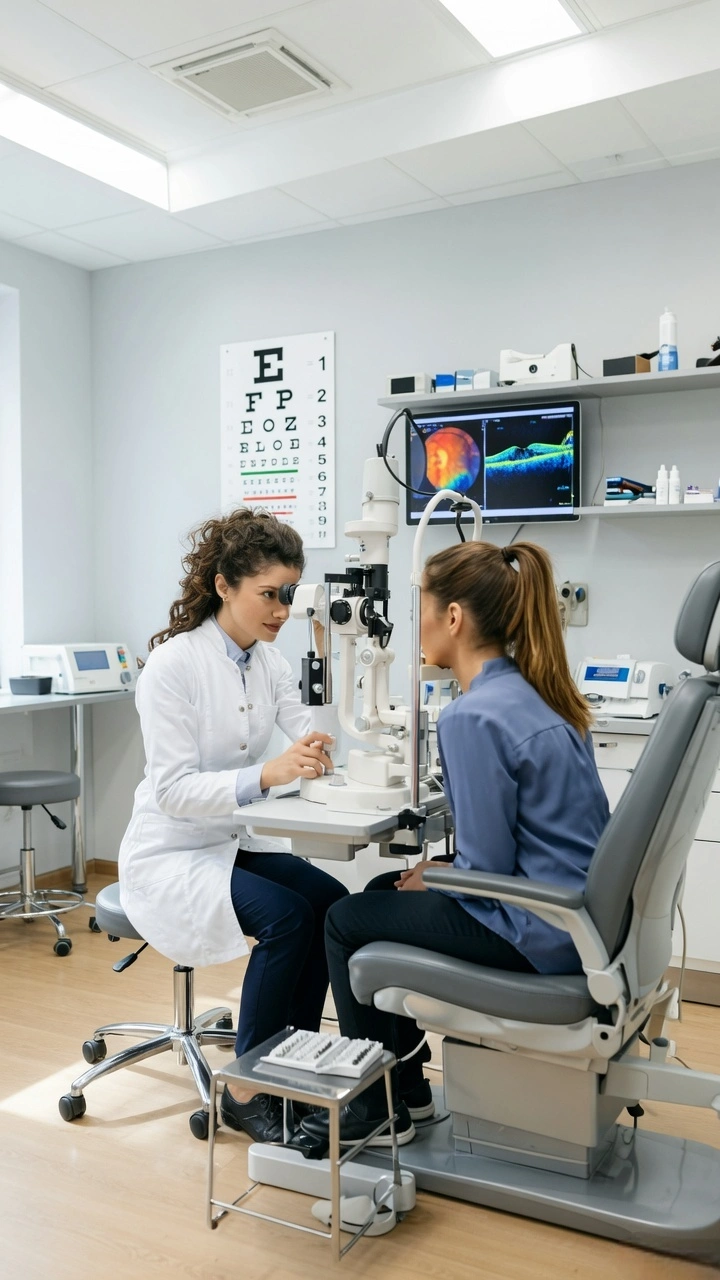
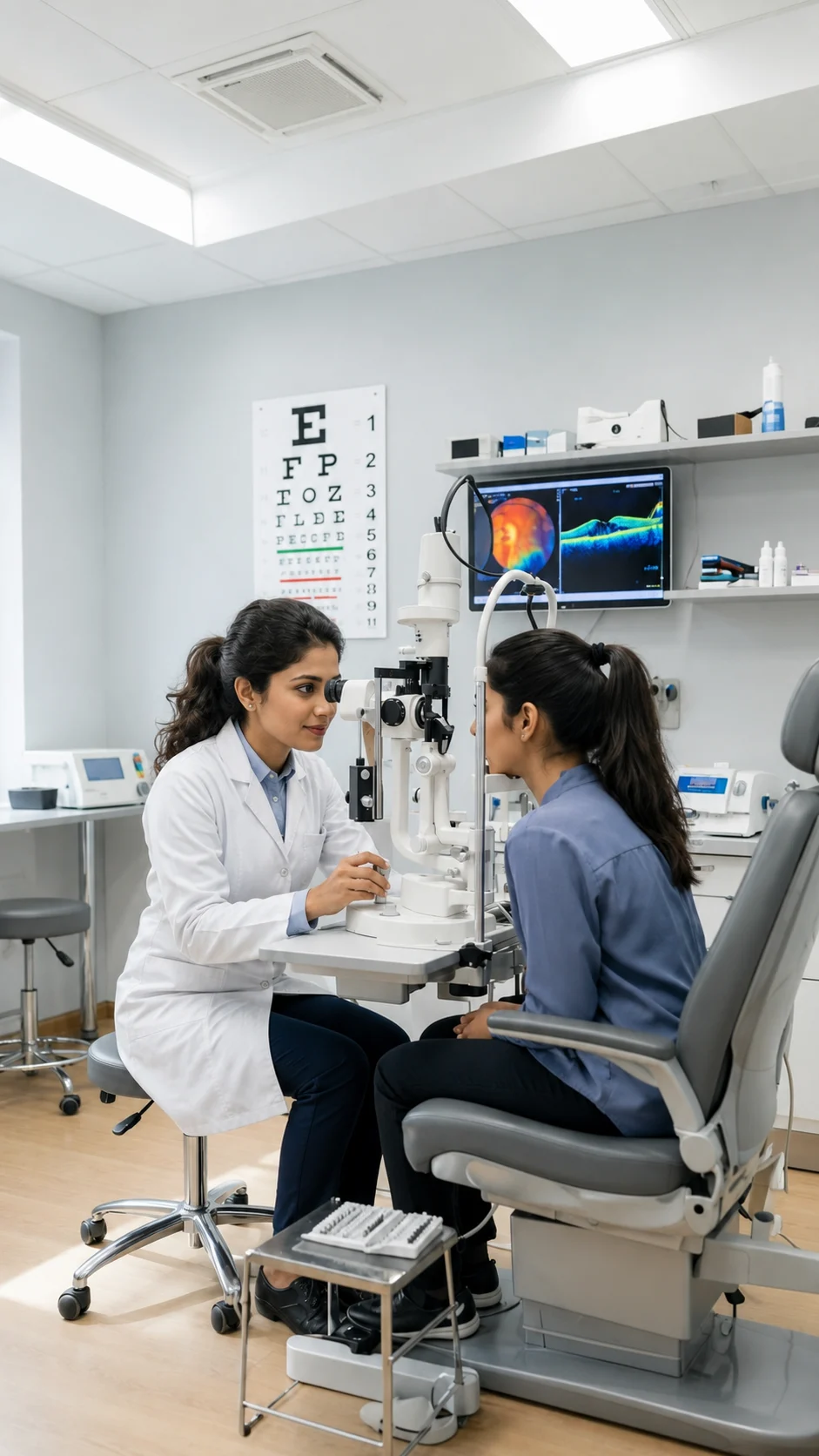
The Cornea department covers conditions like corneal dystrophies, degenerations, inflammations, infections namely ulcers, keratitis, toxic keratopathy, corneal foreign bodies, chemical and traumatic corneal injuries, dry eye disease etc. This may warrant detailed microscopic examinations and procedures including corneal scraping for microscopic examinations, cultures and sensitivity, and corneal topography to know corneal pathologies. Also, AS-OCT and anterior segment OCT imaging is done to know the location and extent of pathology.
The department of refractive surgery deals with procedures that can correct refractive errors like nearsightedness, farsightedness, and astigmatism and improve vision in patients. They help reduce or eliminate the need for glasses or contact lenses. The procedures available include LASIK, TransPRK, Implantable Collamer Lens (ICL) surgery and Intracorneal Ring Segment (ICRS) surgery.
Meet The Doctor
Dr. Swapna Nair
PROCEDURES
Keratoplasty
They are surgeries that restore the integrity and vision of the eyes. It involves a cornea transplant from a donor to host. It involves full thickness and lamellar corneal transplants. Lamellar surgeries are recently evolved procedures that have a lower rejection rate. They are needed in conditions like severe corneal melts, severe trauma, keratoconus, corneal scars, ocular surface neoplasias, and corneal decompensation which may be natural or surgically induced.
Cornea Collagen Cross-linking (C3R)
They are minimally invasive procedures used to prevent the progression of corneal ectasia such as keratoconus and post-LASIK ectasia. The procedure is used to strengthen the cornea and to halt the progressive corneal thinning conditions using riboflavin and ultraviolet light.
Phototherapeutic Keratectomy (PTK)
It is a corneal surgery that uses an excimer laser to treat a variety of corneal surface disorders like corneal degenerations, dystrophies, epithelial defects, irregularities, and superficial stromal scars. It can also treat complications from other procedures like LASIK and PRK
Amniotic Membrane Transplant
Amniotic membrane transplant is used to treat severe corneal thinning disorders with inflammation to reconstruct the ocular surface as a graft for ocular surface melts and as a bandage to promote healing in cases of persistent epithelial defects or ocular surface inflammation. The procedure reduces inflammation and stops further thinning of the cornea reducing the corneal scarring rate.
Limbal Stem Cell Transplant
It is a surgical modality to replenish or repopulate the ocular surface epithelium in an eye with limbal stem cell deficiency. It is used in conditions of severe ocular burns from chemical injury or any stem cell deficiency conditions.
REFRACTIVE PROCEDURES
Laser-Assisted In Situ Keratomileusis (LASIK)
It is a widely used laser eye surgery that corrects refractive errors such as myopia, hyperopia, and astigmatism. The procedure involves creating a thin flap in the cornea, which is then lifted to allow for precise laser reshaping of the underlying corneal tissue. It is known for its high success rates and minimal discomfort, making it a popular choice for those seeking to reduce or eliminate their dependence on glasses or contact lenses.
TransPRK
It is an advanced and specialised laser procedure designed to correct refractive errors, such as myopia, hyperopia, and astigmatism and is an alternative to traditional LASIK. TransPRK is particularly suitable for patients with thinner corneas or those who prefer a non-invasive option. This procedure is entirely automated with no chemical or cuts involved.
ICL (Implantable Collamer Lens) surgery
This procedure is usually used to correct high degrees of refractive error or when corneal refractive surgery is not possible due to pre-existing conditions. The procedure uses a foldable artificial lens which is placed in front of the natural crystalline lens to correct high refractive errors.
ICRS (Intracorneal Ring Segment) surgery
ICRS is a minimally invasive procedure designed to correct keratoconus and other irregular corneal shapes by inserting small, crescent-shaped rings into the cornea. These rings help to flatten the cornea, improving visual acuity and reducing the need for glasses or contact lenses. In addition, the presence of a corneal inlay may provide biomechanical support for this ocular tissue.
SMILE is a minimally invasive, flap-free laser vision correction procedure. A small corneal lenticule is created and removed through a tiny incision to reshape the cornea.
Trans PRK is a flap-free, no-touch laser vision correction procedure. The corneal surface layer is removed by the laser itself before reshaping the cornea, making it ideal for patients with thin corneas or active lifestyles.
Best for
Thin corneas
Dry eyes
Contact sports athletes
Mild to moderate refractive errors
Benefits
No corneal flap
Enhanced corneal stability
Suitable for more patients
Excellent visual outcomes
Laser-Assisted In Situ Keratomileusis (LASIK)
LASIK is one of the world’s most commonly performed laser vision correction procedures. It reshapes the cornea using an advanced excimer laser to correct refractive errors, reducing or eliminating the need for glasses or contact lenses.
Best for
Myopia (Near-sightedness)
Hyperopia (Farsightedness)
Astigmatism
Benefits
Quick procedure (10–15 min)
Minimal discomfort
Rapid visual recovery
Long-lasting results
ICL (Implantable Collamer Lens) surgery
ICL is a premium vision correction procedure where a soft, biocompatible lens is implanted inside the eye without removing the natural lens. It is ideal for patients with high refractive errors or thin corneas.
Clear Lens Exchange involves replacing the eye’s natural clear lens with a premium intraocular lens (IOL) to correct refractive errors and prevent future cataracts.
Best for
Thin corneas
Dry eyes
Contact sports athletes
Mild to moderate refractive errors
Benefits
No corneal flap
Enhanced corneal stability
Suitable for more patients
Excellent visual outcomes
Presby MAX
Presby MAX is an advanced laser treatment designed to correct presbyopia (age-related difficulty in near vision) while maintaining excellent distance vision. It reshapes the cornea to provide a smooth range of vision.